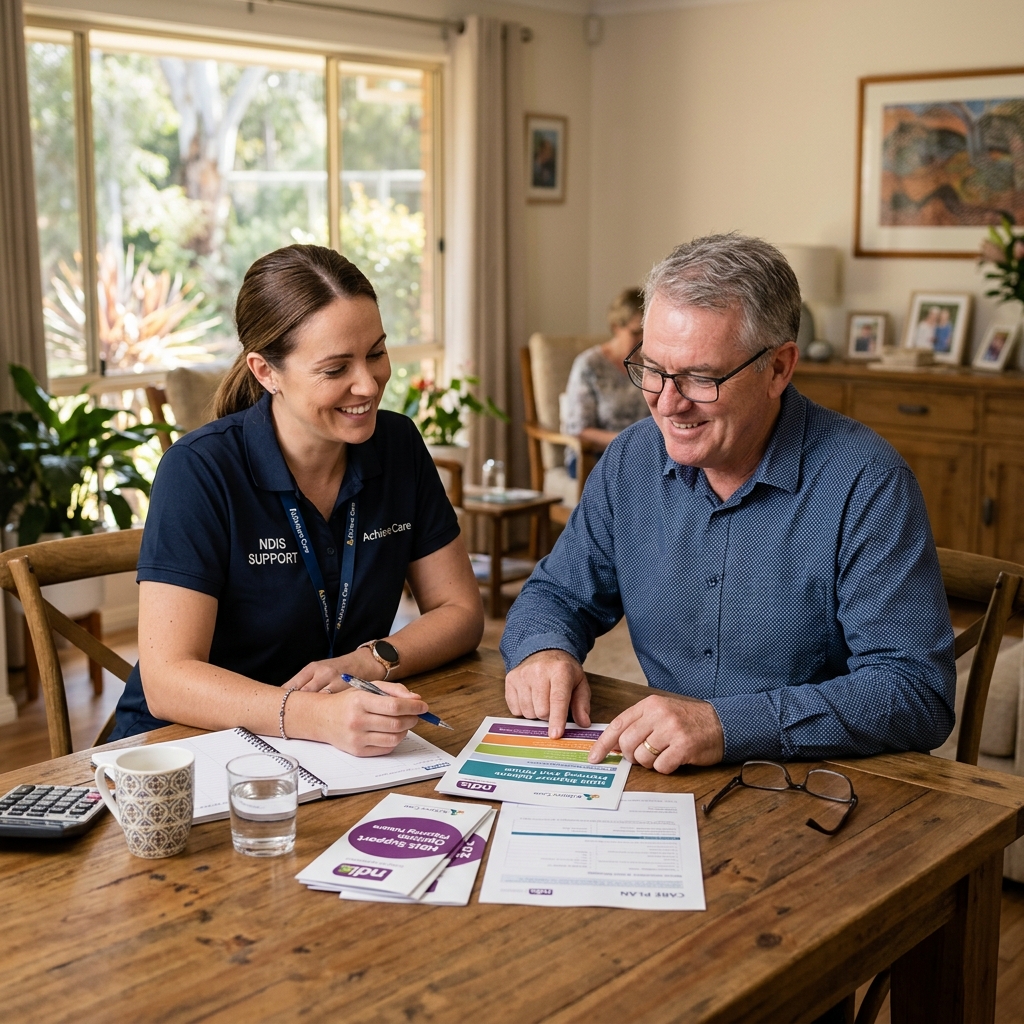
What are NDIS supports?
The National Disability Insurance Scheme (NDIS) supports eligible people with permanent and significant disability to access supports that may help them live with more independence, safety, and community connection. For many participants and families, the NDIS can feel overwhelming at the start because there are new terms, funding categories, service agreements, providers, plans, and reporting requirements to understand.
At Komplete Disability Support Services, we believe support should be explained in a simple and respectful way. Participants and families should feel informed, not confused. This article gives a basic overview of NDIS services and what to consider when choosing support.
NDIS supports are services, items, or equipment that may be funded through a participant’s NDIS plan. These supports are intended to relate to the participant’s disability support needs and goals. They can include help with daily personal activities, community participation, skill development, transport-related support, therapeutic supports, assistive technology, and more.
Not every service or item will automatically be funded. The NDIS considers whether supports meet relevant rules and whether they are reasonable and necessary for the person’s disability needs and goals. This is why it is important to understand your plan, keep good evidence, and speak with your planner, local area coordinator, support coordinator, or other relevant professional when you are unsure.
Common NDIS Services Participants May Use
Every participant is different, but some common support areas include a wide array of options designed to build capacity and provide essential daily assistance.
Daily Living Support
Daily living support may include help with personal care, hygiene, dressing, meal preparation, household routines, medication prompts where appropriate, and support to build daily skills. This type of support should always be delivered with dignity, privacy, and respect.
The goal is to assist participants in maintaining their health and well-being while promoting as much independence as possible. A support worker from Komplete Disability Support Services might assist a participant in establishing a morning routine that makes the rest of their day feel more manageable. This could mean physical assistance with showering, or it could mean verbal prompts and encouragement while the participant completes the tasks themselves.
Community Access and Social Participation
Community participation support may assist participants to attend appointments, join social activities, visit community places, participate in hobbies, attend events, or build confidence using local services. The purpose is not only to “go out”, but to support connection, choice, and meaningful participation.
Being an active part of the community is vital for emotional well-being. It reduces isolation and provides opportunities to build lifelong friendships. Whether it’s joining a local sports club, attending an art class, or simply having a coffee at a nearby café, this support is tailored to match the participant’s unique interests.
Capacity Building
Capacity building supports focus on strengthening skills over time. This may include learning routines, improving communication, building confidence, developing independent living skills, or learning how to make choices and manage parts of daily life with the right level of support.
Instead of doing things for the participant, capacity building focuses on doing things with the participant. Over time, the participant may need less assistance for a specific task, freeing up their funding and time to focus on new, larger goals.
Support Coordination
Some participants have funding for support coordination. A support coordinator can help participants understand their plan, connect with providers, coordinate services, and prepare for reviews. Providers delivering support coordination must follow relevant obligations and act in the participant’s interests.
Navigating the various providers, service agreements, and budgets can be complex. A support coordinator acts as a guide, ensuring that the participant’s plan is being utilized to its fullest potential in a way that directly aligns with their goals.
Choosing the Right Provider
Choosing a provider is an important decision. A good provider should listen first, explain services clearly, and respect your culture, preferences, communication style, and goals. Before starting services, it is helpful to ask:
- What supports can you provide?
- How do you match workers with participants?
- How do you manage safety and quality?
- How do you communicate with families and support coordinators?
- How do you handle changes, cancellations, or feedback?
- Can I review or change my supports if my needs change?
The right provider should help you feel comfortable, respected, and involved in decisions.
Why Person-Centred Support Matters
Person-centred support means the participant is not treated as a task list. Instead, support is planned around the person’s life, goals, strengths, routines, preferences, and choices. For example, two people may both need help with daily living, but the way that help is delivered may be completely different.
One participant may want quiet, structured support at home. Another may want support to build confidence in the community. Another may need culturally familiar communication or family involvement in decision-making. Person-centred care recognises these differences.
It places the participant in the driver's seat of their own life, ensuring that the support they receive is aligned with who they are and what they want to achieve, rather than forcing them to adapt to a rigid service model.
Preparing for Services
Before beginning support, it can help to prepare:
- A copy of the current NDIS plan
- Participant goals
- Preferred routines
- Communication needs
- Cultural or language preferences
- Health and safety information
- Emergency contacts
- Behaviour support or care plans, if relevant
- Preferences around workers and scheduling
This information helps the provider understand what safe and respectful support looks like for you. It ensures that from day one, the support team is fully equipped to deliver high-quality, tailored care.
Final Thoughts
The NDIS can be complex, but participants and families do not need to understand everything at once. Start with your goals, your daily needs, and the supports that matter most to you. Ask questions, keep records, and choose providers who communicate clearly.
Komplete Disability Support Services is committed to respectful, reliable, and person-centred support. We work with participants, families, carers, support coordinators, and referrers to understand needs and plan support that makes sense for the person.
Ready to take the next step?
If you are looking for a dedicated and respectful provider to assist you with your NDIS journey, we are here to help.
Make a Referral or Enquire Now.
Call us: 0470 655 914 or email admin@kompletedisability.com.au.